
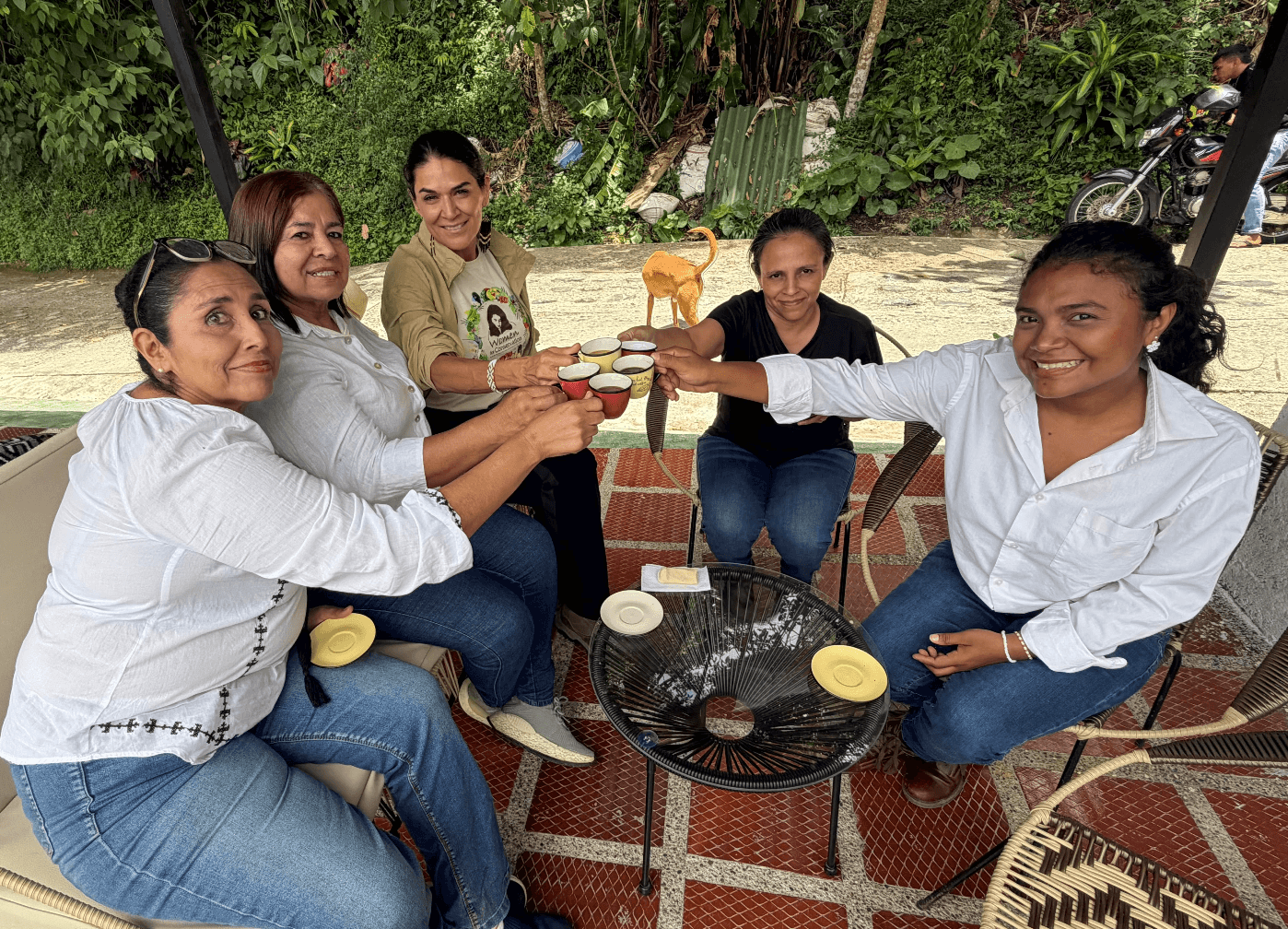
Women for Conservation’s founder and president Sara Lara visited the Sierra Nevada of Santa Marta last month to investigate the intersections between coffee production, women’s empowerment, biodiversity conservation, local identity, and natural resources. By discussing directly with the women, Sara Lara focused on a key element: “Women for Conservation does not come to communities to tell women what to do. We arrive to listen to what they already know. Our goal is to understand what they need and decide together how to strengthen their ideas”.
“At Women for Conservation, we believe in them. We believe that when a woman thrives while protecting her environment, conservation also thrives” (Sara Lara).
Through focusing on lived experiences, local knowledges, and agency, she highlights how conservation and local communities are intertwined, coexist, and need one another for survival. Women from rural areas “are not waiting for someone to save them. They already have the knowledge, the strength, and the desire to succeed”. Sara Lara emphasizes that what local women “need is opportunities, opportunities to learn and to improve their production, access to markets, generate their own income, and to continue protecting and caring for the land that we all depend on”.
The women coffee-producers demonstrate how coffee is so much more than what fills your cup. Their hard and often invisible work combines their desire to protect nature through sustainable solutions, connect with their ancestors’ practices and engagement with land, and their own empowerment through work, income, identity, and entrepreneurship. As Sara said,
“when we talk about conservation, we often only think about protecting a forest or a species but conservation also occurs in the decision to protect a water source and maintain trees around a crop farm. It can be protecting the land and producing in a way that allows a family to live on a land without destroying it”.
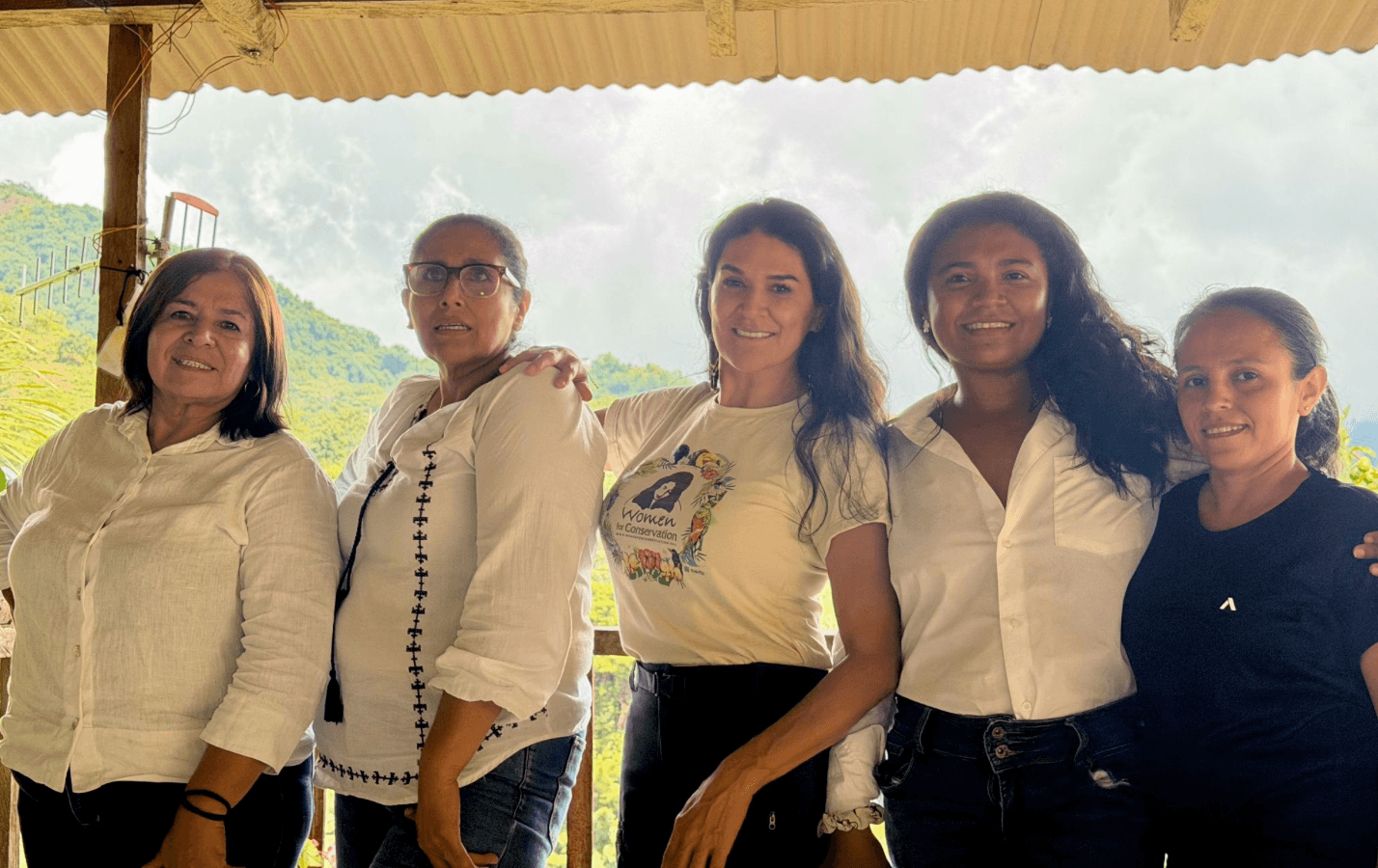
Mary Luz Hincapie focused on her own coffee brand (“amor de madre: a mother’s love”). Through her work, she highlighted the connections made with her family, the land, its resources, and her own knowledge. As she formulated it: “it is not only about working with coffee and the fruit of the land but it is also about protecting and caring for the earth because it gives us everything”.
Nuris Becerra Ortíz highlighted her own entrepreneurship and dedication to ancestral practices through coffee. She works alongside other women, who have presented themselves to the Coffee Production Competitions. This work, agency, dedication, and ability have labeled the women as influential for other women and future generations. This influence was further exemplified as Bertha and Mary Luz now lead the Departmental Committee, while Nuris and Karen were elected to lead the Municipal Committee for Coffee Producers. As the first women to lead this committee, they have achieved a historic and consequential milestone, asserting greater recognition, agency, and influence in shaping the coffeemaking process at both local and global scales.
Bertha Ortíz focused on how coffee is a part of the Sierra Nevada identity. Through her attachment to land, history, and practice, she transmits this knowledge to younger generations to ensure cultural continuation and the coffee-making process. She continues to transmit ancestral knowledges by highlighting the importance of protecting land, water, trees, and natural resources through sustainable practices, as done by previous generations. Karen Guerra also highlighted how the coffee mucilage (the sticky part of the coffee cherry) contaminates the land and water, thus sustainable collection methods should be explored.
Karen focused on the beautiful intersections between familial legacy, the coffeemaking process, and the central role of women in this practice. Bertha further centralized this role by highlighting how examples of women in leadership are crucial for advancing the position of women in society and expanding their possibilities. Furthermore, they have a crucial voice in transmitting sustainable practices to protect the Earth and its natural resources.
These experiences highlight the agency and possibilities that emerge when rural women from the Global South are given the opportunity to demonstrate and use their knowledge, tools, and economic opportunities to shape their own futures. As Sara Lara explains, “we cannot ask a community to protect nature if the people who live there do not have the opportunity to build a dignified life.”
This is why Women for Conservation focuses on women, conservation, and opportunity: when a woman has the resources to thrive, “the impact goes much further than one individual. It arrives to her family, her community, and the world around her” (Sara Lara).
If you are interested in learning more, Women for Conservation invites you to listen to the testimonies and voices of the women coffee farmers! English Subtitles are available.
If this project interests you: please share this article, its video, follow our social media, or make a donation! Your involvement supports species conservation, local communities, women’s empowerment, and environmental needs!