Written by Simran Sinha
 A song, a forest, a species. Sundari is all three.
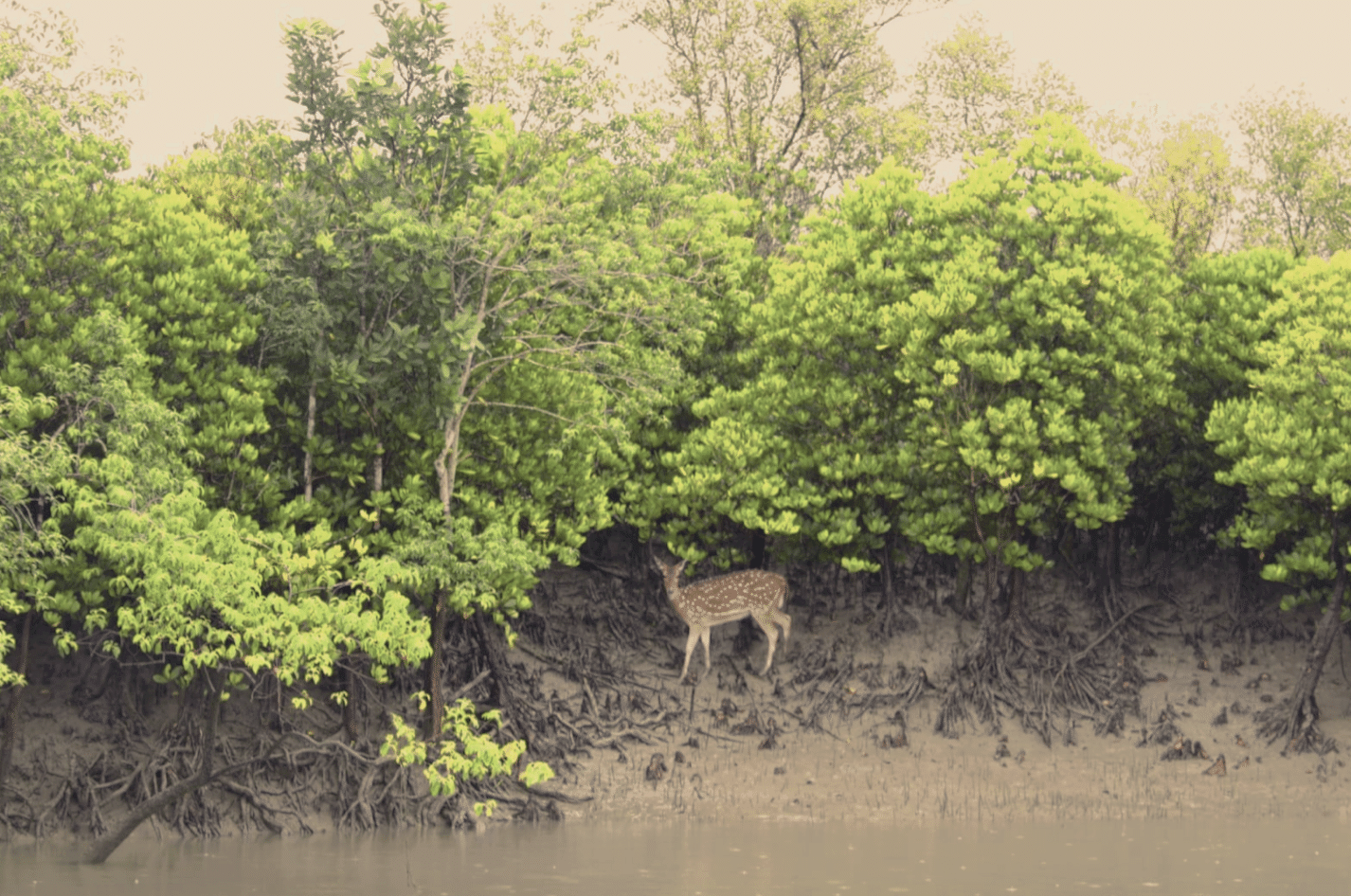
The Sundari (Heritiera fomes) was once one of the defining trees of the vast mangrove landscape of the Sundarbans. So abundant in the forest that the Sundarbans itself is thought to take its name from this species.
Strangely, today, it has become much harder to find. It is listed as Endangered on the IUCN Red List; its decline driven by coastal development, rising sea levels and salinity.
The Sundarbans is the world’s largest mangrove forest located in the delta of the Ganges, Brahmaputra, and Meghna rivers along the Bay of Bengal. It is where the river meets the sea, creating an intricate network of thousands of tidal creeks and mudflats, reshaped daily by the rising and falling tides they receive each day.
This tidal forest covers nearly 10,000 square kilometres of land and water shared between India and Bangladesh, roughly 7–8% of the world’s mangroves. It shelters some of the most extraordinary biodiversity–serving as critical nurseries for fish, crustaceans and birds and the only place on Earth where the Royal Bengal tiger has evolved to survive and thrive in the region’s saline environment.
Mangroves are what make life possible here. Their root networks trap sediment and slow the erosion of mudflats. Their density buffers the islands against storm surge and cyclones arising from the Bay of Bengal. They store carbon in biomass and soil at rates at least 4 times higher than terrestrial forests. These forests are not only habitat for wildlife — they are the ecological backbone of a landscape where millions of people live and depend on the ecosystem through harvesting of forest produce like fish and honey, agriculture, and more recently tourism. The people of this delta hold the forest in deep reverence through their worship of the folk forest goddess Ma Bonbibi, living in daily relationship with the forest and its inhabitants.
However, this critical ecosystem is now under severe threat. More than 24% of mangrove cover has been lost in recent decades. Sea levels here are rising three to four times faster than the global average. In places the coastline retreats by tens of metres a year, and four inhabited islands have already disappeared.
As land and livelihoods become less reliable, people from these forest-dependent communities increasingly migrate out for work, with some estimates suggesting that roughly 60% of the total male workforce in the Indian Sundarbans has migrated out of the region to seek better employment opportunities. This surging out-migration leaves women behind to shoulder a triple burden of survival: managing unpaid domestic labor, stewarding ancestral lands, and securing family income amid a volatile climate.
Through their daily interactions with the ecosystem, these women have developed a profound understanding of the landscape—wisdom that is often overlooked in mainstream conservation and climate adaptation policies. They save seeds for future harvests, read seasons by the subtle shifts in wind,and track the changing paths of migrating birds.
They carry knowledge that is rooted in place.
A different question
 Much of the conservation work involving women follows a predictable pattern, typically limiting their participation to being brought into restoration projects or trained in skills or alternative livelihoods.
These approaches can be valuable. But there is an assumption hiding underneath them:
Women are there to deliver a conservation goal someone else has already set: a top-down approach that systematically overlooks the deep ecological wisdom they already possess.
At WOCAL (Women’s Collective Action for Local Biodiversity), we asked a different question:
What if women moved from delivering conservation to shaping it?
Instead of beginning with a predetermined activity and asking women to participate, what would happen if women had the space, the resources and the trust to lead solutions to the conservation challenges in their communities.
The Mangrove Lab was our first attempt to find out.
The cohort
Between March and June 2026, six women from Bali Island in the Indian Sundarbans came together for a three-month pilot, supported by a seed grant of USD 3,500 from Women for Conservation.
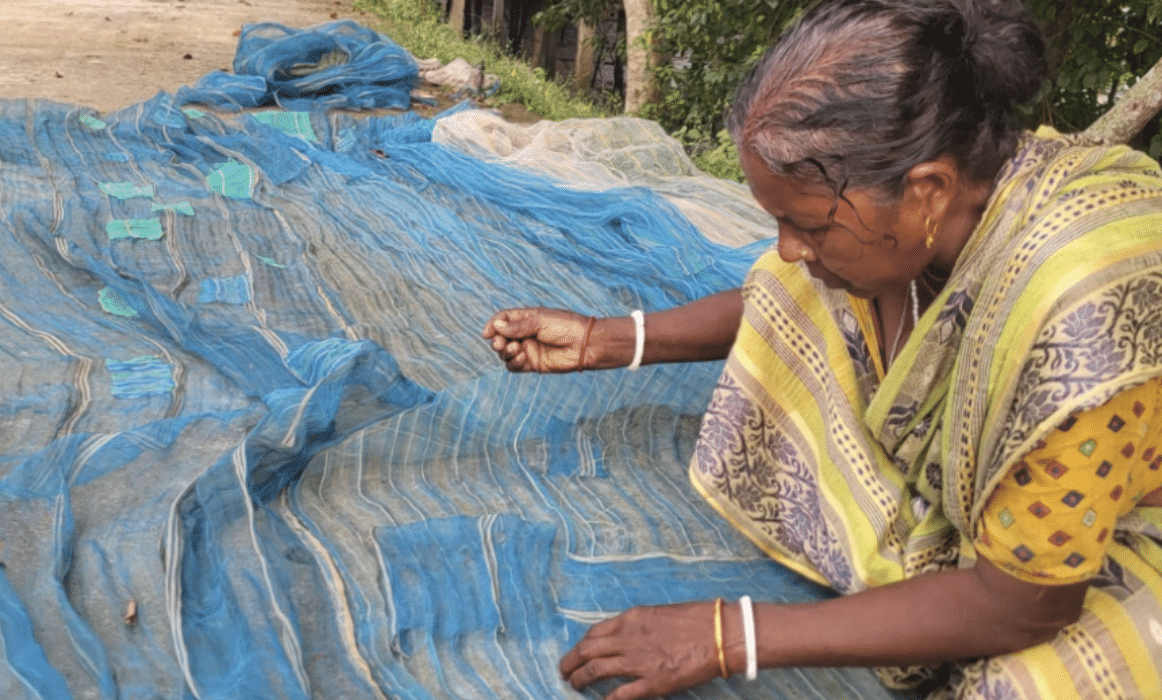
Anjali Jana, 48. Anjali makes everything she touches grow. She has been weaving kantha since she was fifteen—a craft passed down by her mother—and holds a deep, intuitive mastery over the land she farms.
Pratima Jana, 58. Few know the jungle like Pratima. Decades spent venturing deep into the mangroves as a prawn seed collector have given her an unmatched understanding of the wilderness and a lifetime of stories to share.
Puspa Mondal, 30. The artist and musician of the community. She translates the rhythms of nature into song and script, writing about local birds and trees.
Moumita Barkandaj, 28. Moumita is passionate about nature and entrepreneurship. She channels her curiosity into her work as the record-keeper, tracking the daily growth and health of the cohort’s mangrove nursery.
Sonali Bera, 26. Driven by an insatiable curiosity, Sonali is a self-taught wildlife documenter. She coordinates the group, and uses her lens and voice to share stories of the natural world.
Susmita Jana, 25. The youngest of the group, Susmita finds joy in tending her homestead vegetable garden while learning the science of cultivating mangroves.
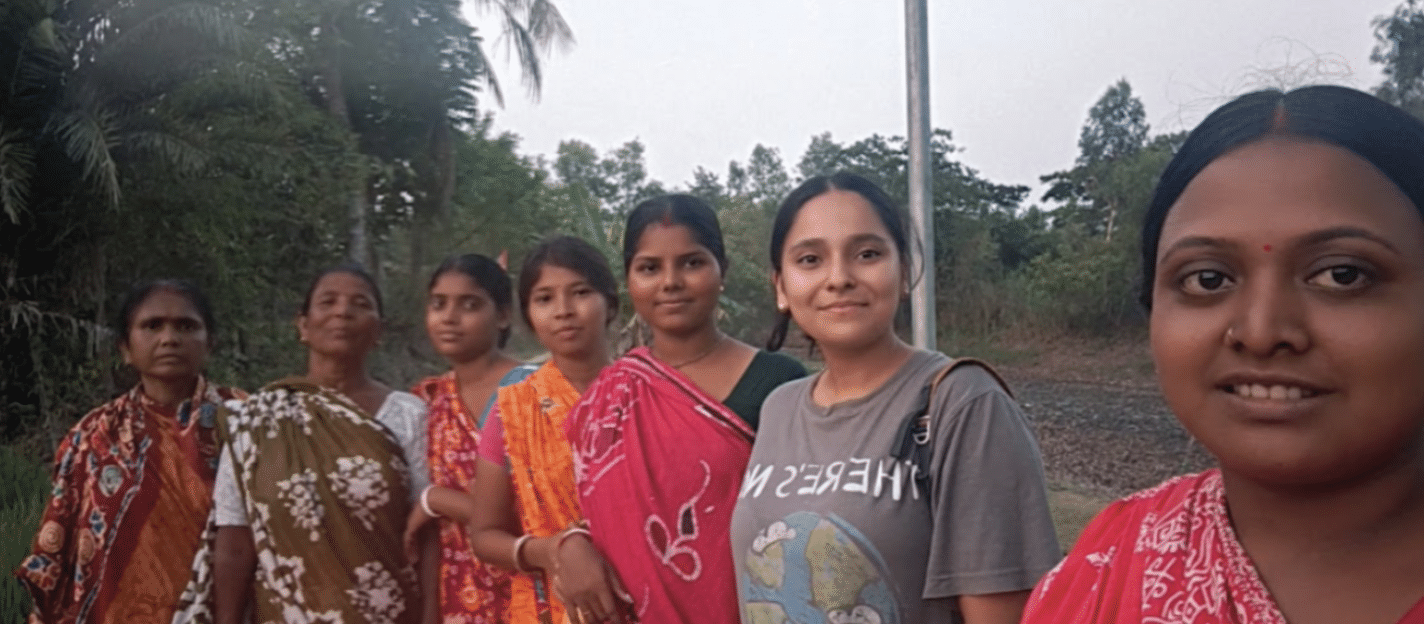 From left to right: Anjali, Pratima, Susmita, Sonali, Puspa, Simran, Moumita
The exploration
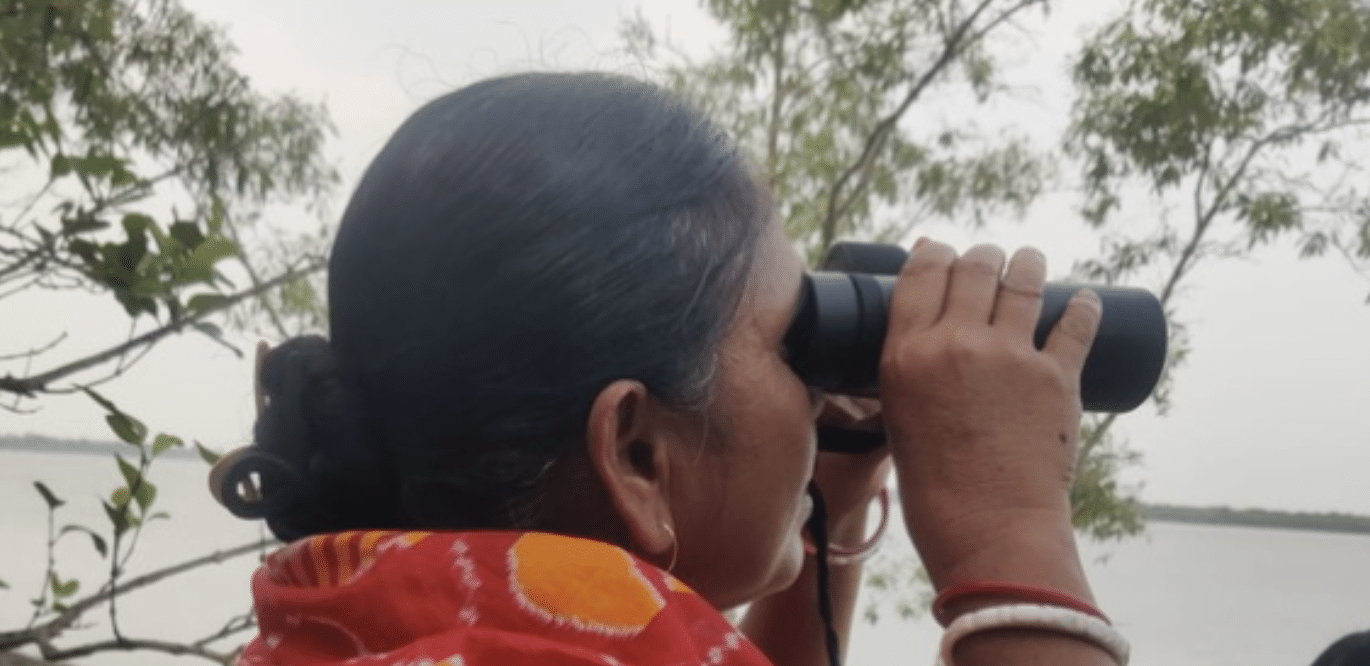 Together we spent long stretches outdoors, exploring the mangrove ecosystem, documenting biodiversity, and talking about the changes the women had noticed growing up. Through the program, the cohort mapped the ecological challenges in their own surroundings, investigated them more deeply, and chose where they wanted to act.
Three priorities emerged: coastal erosion and mangrove loss; the decline of native pollinators; and plastic pollution in the riverways.
The Prototypes
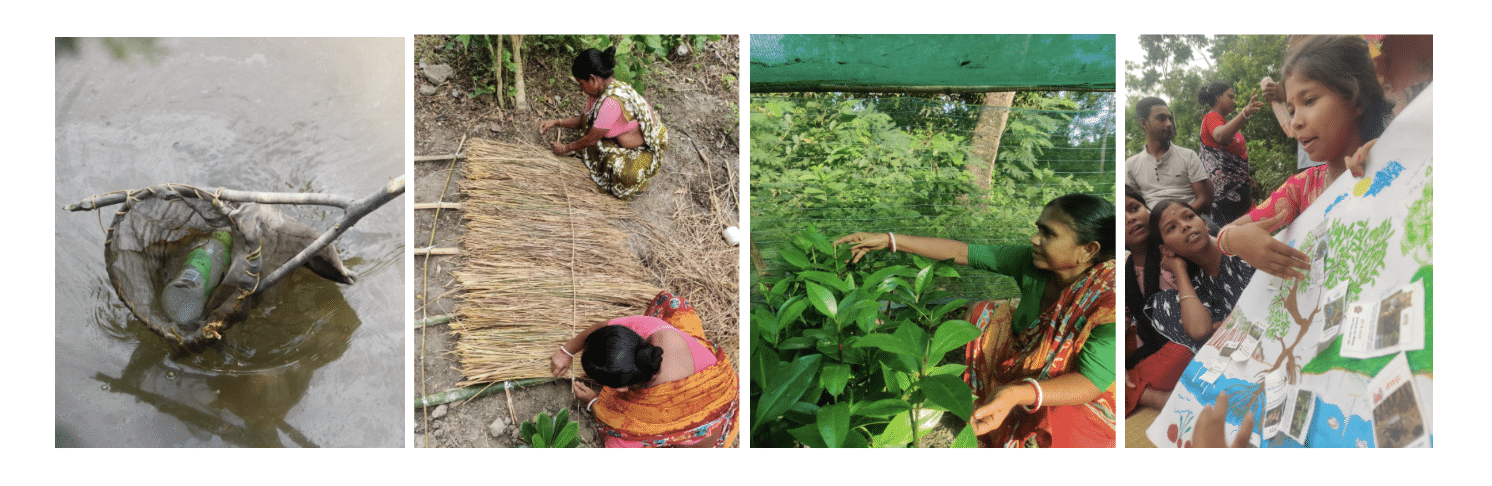 From these came six experiments. Not six activities handed down to them — six ideas they developed and built themselves.
Over three months, the Lab ran ~45 facilitated sessions, alongside biodiversity and community walks aimed at better understanding the ecosystem through direct observation and conversation.
The cohort delivered diverse, community-driven environmental projects. One group engineered plastic-removal tools for a tidal canal using bamboo poles and repurposed fishing nets. Another established a native pollinator garden featuring flowering and fruiting plants to support local bees, butterflies, and birds. A third team constructed a bird shelter from bamboo and hay, drawing from their memories of sparrows nesting in traditional thatched roofs. Meanwhile, others turned to imagination, crafting playful storytelling games to teach local families about the environment.
And then came the mangrove nursery.
The nursery that began with a disagreement
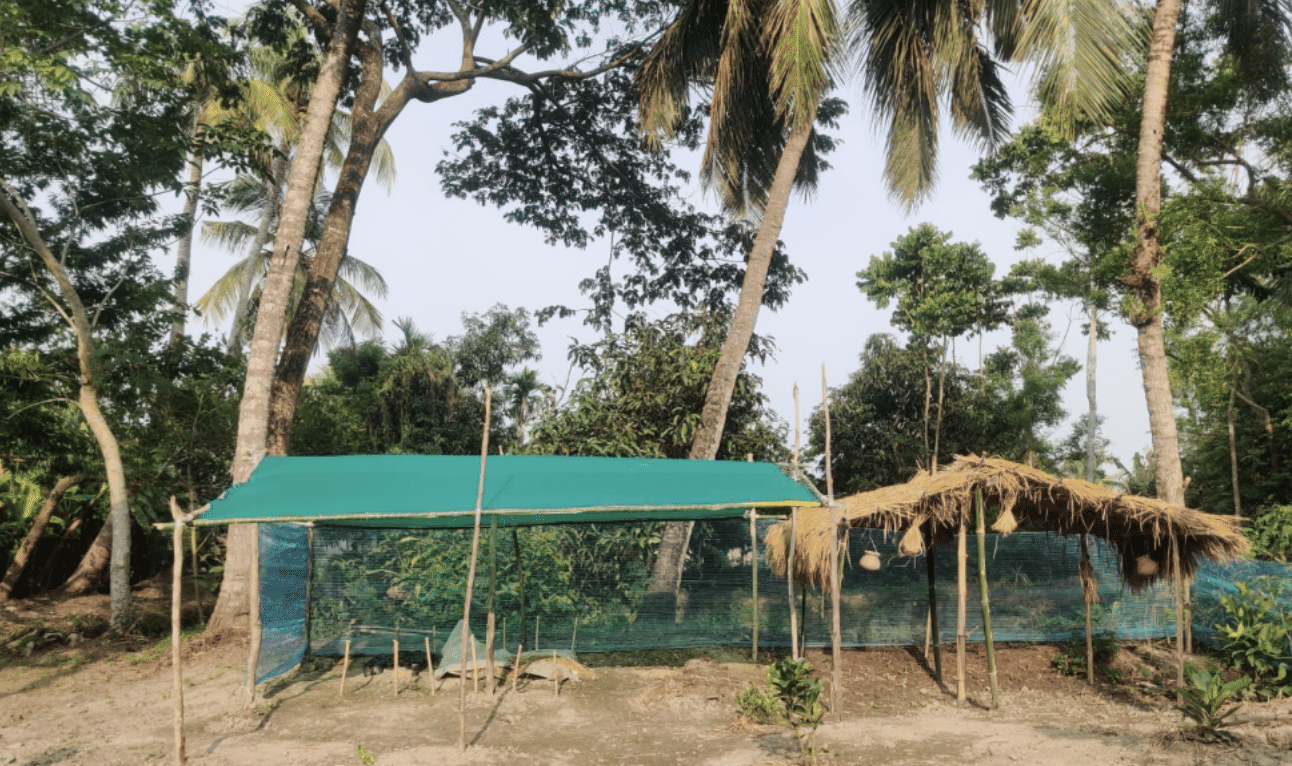 The nursery became the clearest example of what happens when local knowledge is treated not as something to be preserved, but as something that can actively shape conservation.
To address the rapid disappearance of their coastal forests, the women decided to take mangrove restoration into their own hands. Because the fierce summer heat made direct planting along the exposed mudflats nearly impossible, their intimate understanding of local weather cycles told them to wait for the monsoon rains. In the meantime, they decided to build a temporary nursery to cultivate saplings.
However, the location of this nursery sparked a debate. Our nursery sat inland, far from the main tidal river where the water is heavily brackish—a salty mix of seawater and fresh river currents. A professional nursery practitioner advised the women against the location, warning that mangroves are coastal plants that strictly require these salty conditions to survive and would perish without them.
However, the women pointed to the mangroves already growing in their backyards for generations and they were determined to grow them there!
Rather than deciding which source of knowledge was right, they tested the difference.
They selected native species that could be grown inland, collected them and began testing different germination methods.
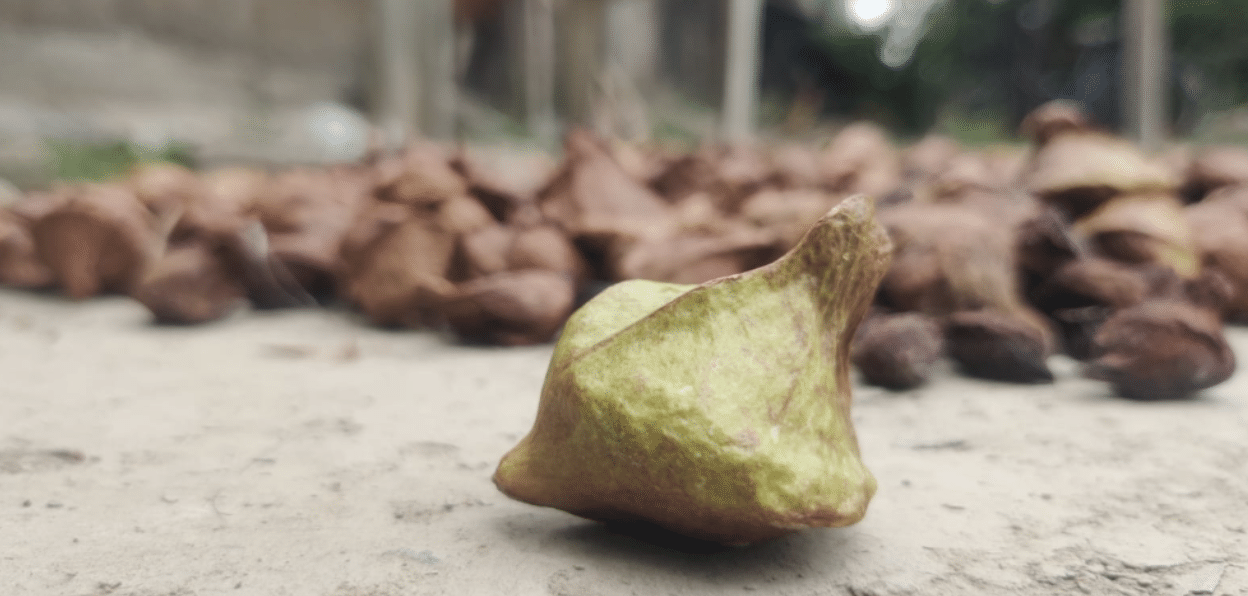 Seeds of the Sundari mangrove – an endangered species in the Sundarbans
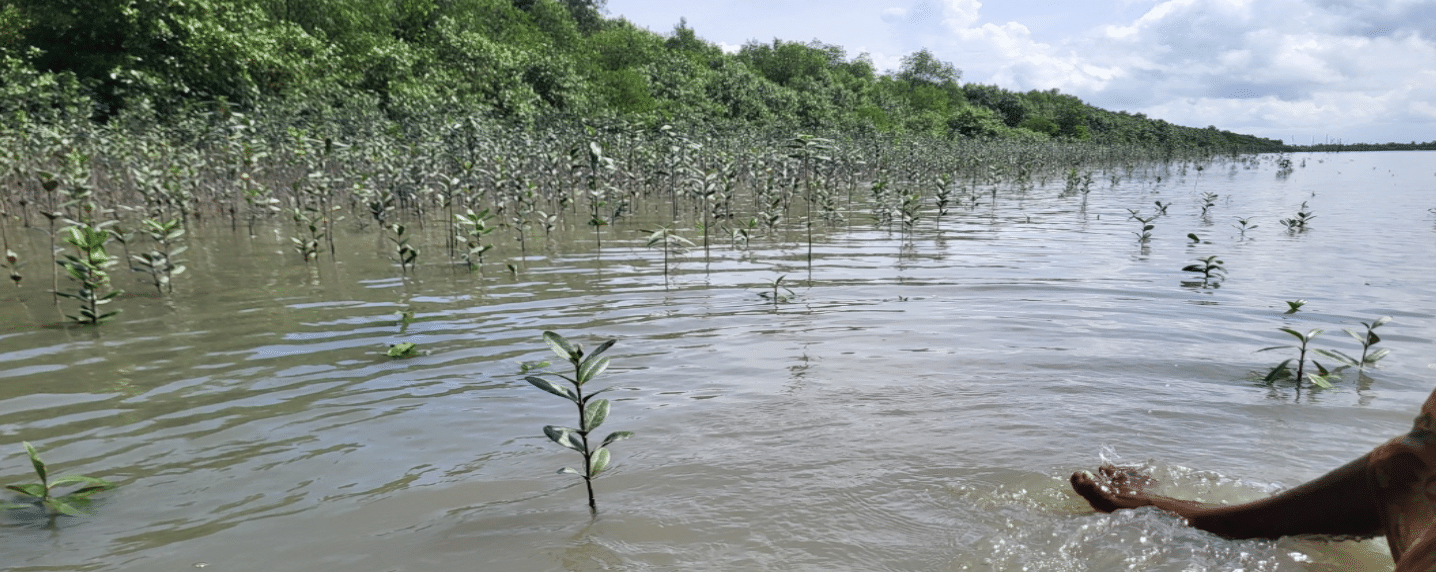
Some seeds submerged in water and some planted directly in pots. The freshwater submergence method produced faster and better results for the species Sundari (Heritiera fomes). Of the first 230 mangrove, 213 survived — a 93% survival rate.
The significance was larger than the number. The women had questioned an assumption, tested their own observation, gathered evidence, and learned from the result.
This was not about placing Indigenous / local knowledge on one side and scientific knowledge on the other. It was about creating a space where both could be questioned, tested, and strengthened by what the ecosystem itself had to say.
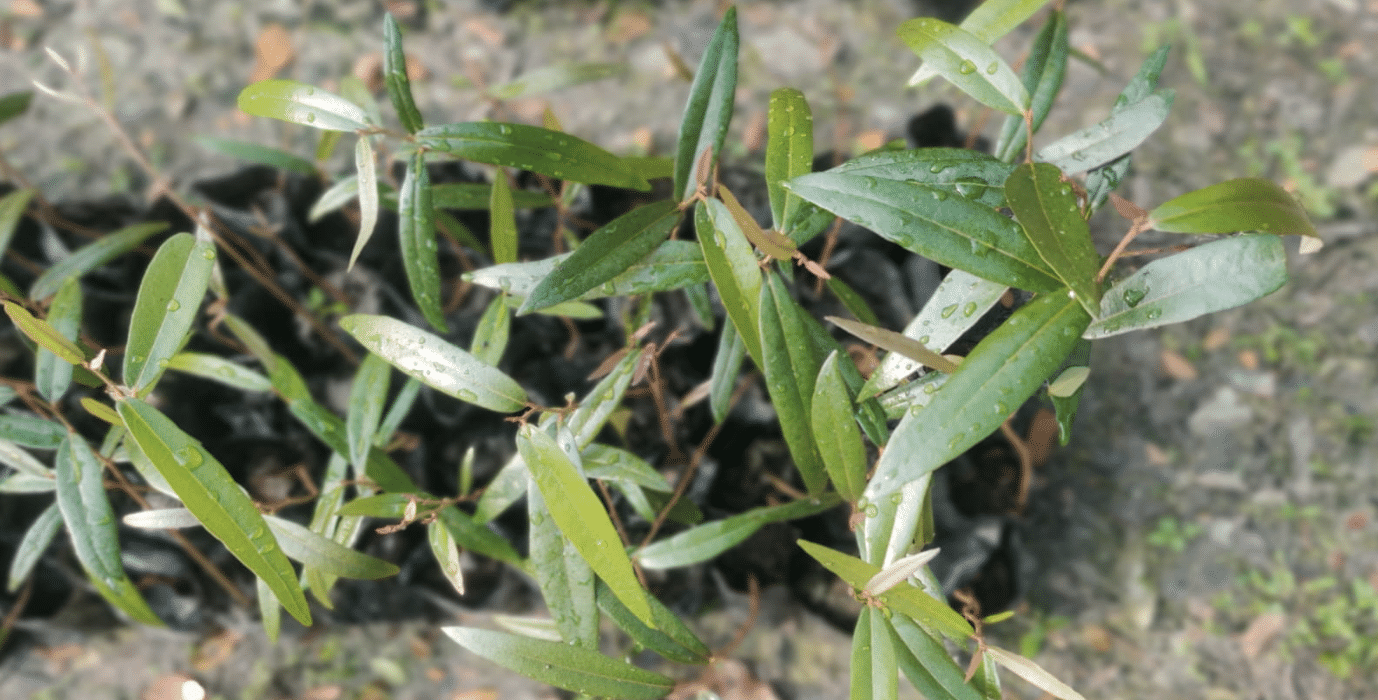 Sundari saplings raised in fresh water, inland, have grown to an arm’s length within 2 months of planting.
_______________________________
What Changed: Agency Over Participation
For the women. All six completed the programme. Over three months they moved from identifying ecological change to designing and building responses to it. They began documenting their own work, sharing knowledge with the community, roles formed around interest and capability rather than being assigned: nursery maintenance, documentation, coordination, materials, design. Some of them earned an income for the first time in their lives.
“I didn’t realise how much we already knew until we began this project.”
– Puspa, Lab Participant
They not only grew in confidence, but in having agency.
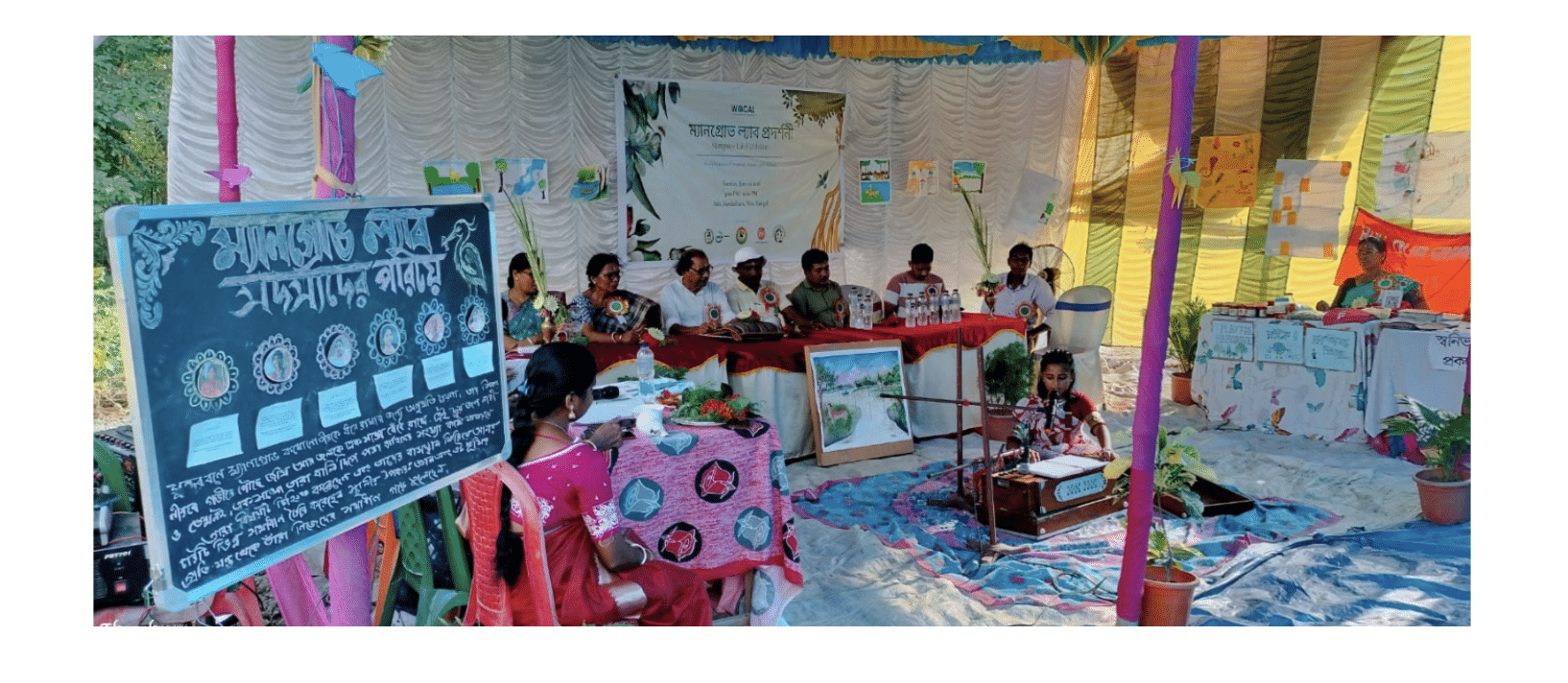
For the wider community. At the end of the pilot the women hosted the Mangrove Lab Exhibition, to celebrate their learning journeys and the mangrove ecosystem with the wider community. More than 150 people attended, including 12 local leaders and institutional stakeholders who actively engaged and even offered support for future collaborations.
Work that had happened largely within the group became visible to families, neighbours and institutions. Even those who had been hesitant to speak in a circle of seven were standing in front of their village, talking about ecological change and what they had built in response.
“It was heartening to see our families, community and local leaders come together for the exhibition. Their encouragement gives us more confidence to carry our work forward.”
– Sonali, Community Coordinator & Lab Participant
“The most enjoyable part of this entire experience was learning and building with each other”
– Anjali, Lab Participant
Across the pilot, more than 400 community members took part in the cohort’s events and conversations.
For biodiversity. 230 mangrove propagules of two species raised during the pilot, since expanded to more than 530 across eight species. A pollinator habitat of 15 native species. A bird shelter made with local materials. Around 40 kilograms of waste were removed from a tidal canal before the monsoon could carry it into the river. 100+ children and parents engaged in environmental awareness and learning.
It would be easy to look at six prototypes and ask whether this is enough to shift an ecosystem as vast and complex as the Sundarbans. It isn’t. Whether the saplings survive transplanting, whether the restored habitat draws back more pollinators and birds, whether local practice changes — all of that has to be tracked over the coming years, and that monitoring has already begun.
But restoration was never the only thing we were testing.
 _______________________________
The outcome that mattered most
We were testing whether a different starting point for conservation was possible in the Sundarbans.
The deepest evidence was not in the numbers. It was behavioural.
The change in confidence. How women moved from being participants to being decision-makers. Adapting to changing circumstances – ecological or political. Questioning assumptions and testing their own. Pursuing ecological questions nobody had assigned them — exploring native honeybees with local honey collectors, starting social media channels to share wildlife stories.
That is the shift we were looking for, and it is the distinction that matters.
Participation asks: will you help us do this?
Agency asks: what do you think needs to be done?
_______________________________
The work never stopped
The pilot project concluded in June, but the nursery continues to thrive. It has expanded from two species to eight, and the sapling count has grown from 230 to more than 530. In August, the project recorded a remarkable 96.5% survival rate. This growth required no new funding; stipends are sustained entirely by savings from the pilot phase. Yet, it isn’t the financial incentive that brings the community back—they return because the nursery belongs to them.
And ultimately, that sense of ownership is the outcome that matters most.
What happens next
As we enter the next phase, our priorities focus on four critical areas:
Scaling Prototypes: Turning these initial eco-experiments into durable, long-term regional solutions.
Tracking & Replication: Rigorously documenting our ecological data so this model can be replicated beyond Bali Island.
Institutional Partnerships: Strengthening collaborations with local governing bodies and the Forest Department.
Sustainable Livelihoods: Transforming this environmental stewardship into a viable, long-term income source for the women.
_______________________________
Our Partners and the Road Ahead
This pilot would not have taken flight without Women for Conservation. Beyond providing a vital seed grant, they have been true partners and champions for women in conservation.
We are now expanding our partnerships and networks to individuals and organizations who share a passion for protecting the natural world and believe that conservation and equity are inseparable. If you work in mangrove restoration, community-led conservation, or women’s environmental leadership, we want to connect.
I have spent the last four and a half years working alongside rural and Indigenous communities in conservation. The same pattern repeated everywhere I went. Women carried an enormous share of the ecological work and held an enormous share of the knowledge, and neither of those reached the rooms where decisions were made.
When I first came to the Sundarbans, I realized the gap was never knowledge. It was access, recognition, and the autonomy to decide.
The Mangrove Lab project brings me back to the image of the Sundari tree – anchoring its roots into the shifting landscape and standing tall amidst unforgiving tides.
It does not exist in isolation from its surroundings. It grows inside a living system of tides, mud, salt, water, fish, birds, people and other trees. Its survival depends not only on the tree, but on the conditions around it.
Conservation works the same way.
Planting a tree is only the first step; creating the conditions for it to survive is what matters. The same truth applies to people: inviting women into conservation means nothing if we do not build the framework for them to lead it.
In the Sundarbans, six women are already proving what is possible when those conditions exist.