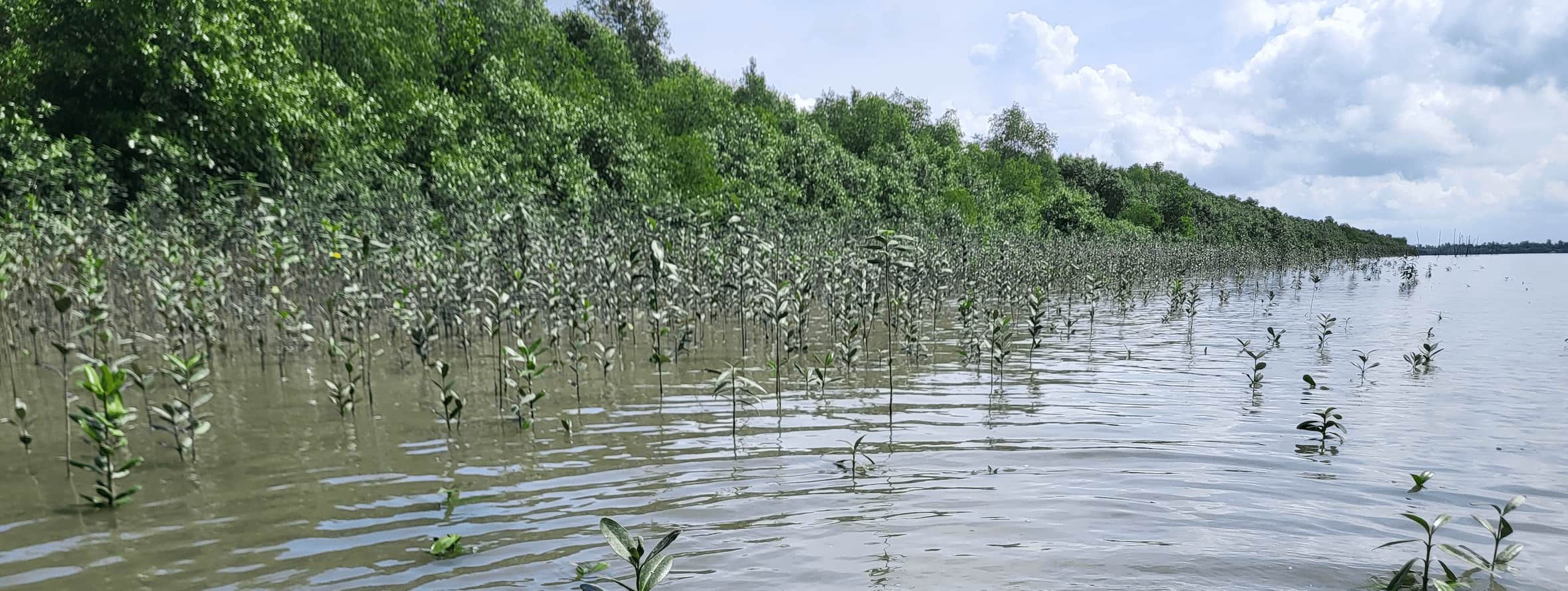
Mangroves, the gangly, zigzagging trees that live in coastal brackish water ecosystems, have a hidden power living inside of them: the power to transform an ecosystem. Found in coastal areas where fresh water meets the ocean, they are remarkably adapted to survive in saline water, and can capture four times more carbon dioxide per hectare than other trees. Mangrove forests are essential nurseries for hundreds of young aquatic and terrestrial organisms, and are highly effective water filters.
Their long, protruding network of roots absorb toxins and debris, create perfect hiding places for baby crustaceans and fish, and stabilize the soil, making them essential for shoreline resilience against rising seawater levels and storms.To put it simply, they are a keystone species: a species that plays an essential role in shaping the health of the entire ecosystem. The coastal ecosystem, including humans, depends on mangroves for life. Mangroves support fish populations, which fishermen need for their livelihoods. Human health depends on mangroves to provide clean water. They also have incredible potential for fighting climate change, especially as the world faces rising carbon dioxide levels, rising sea levels, and increasingly severe storms that destroy homes and swallow land.
This is why scientists are alarmed that we are losing mangrove forests to threats like land development and water pollution — we lost 21.6% of global mangrove cover from 1985-2020 (Chengyuan et al., 2025), and forests are continuing to shrink. If we do not do something, we risk losing one of our most powerful allies in the fight against climate disaster.
A Women-Centered Approach
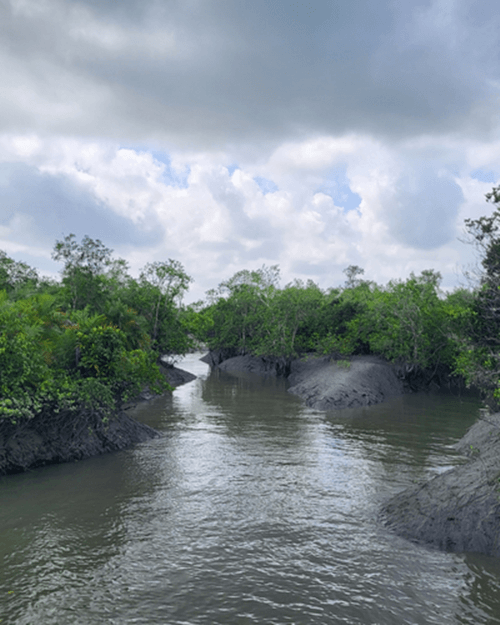
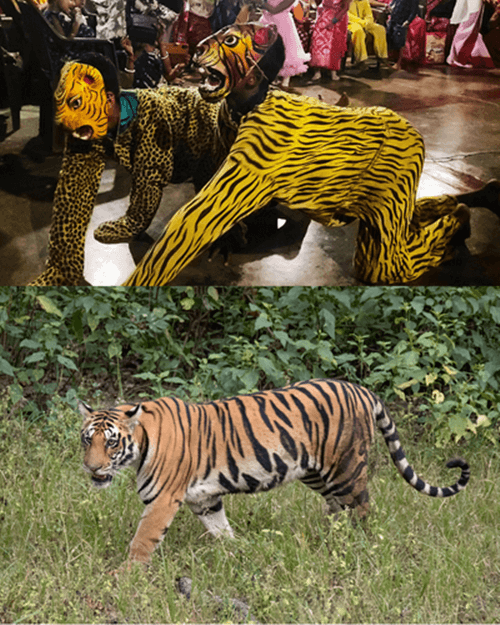
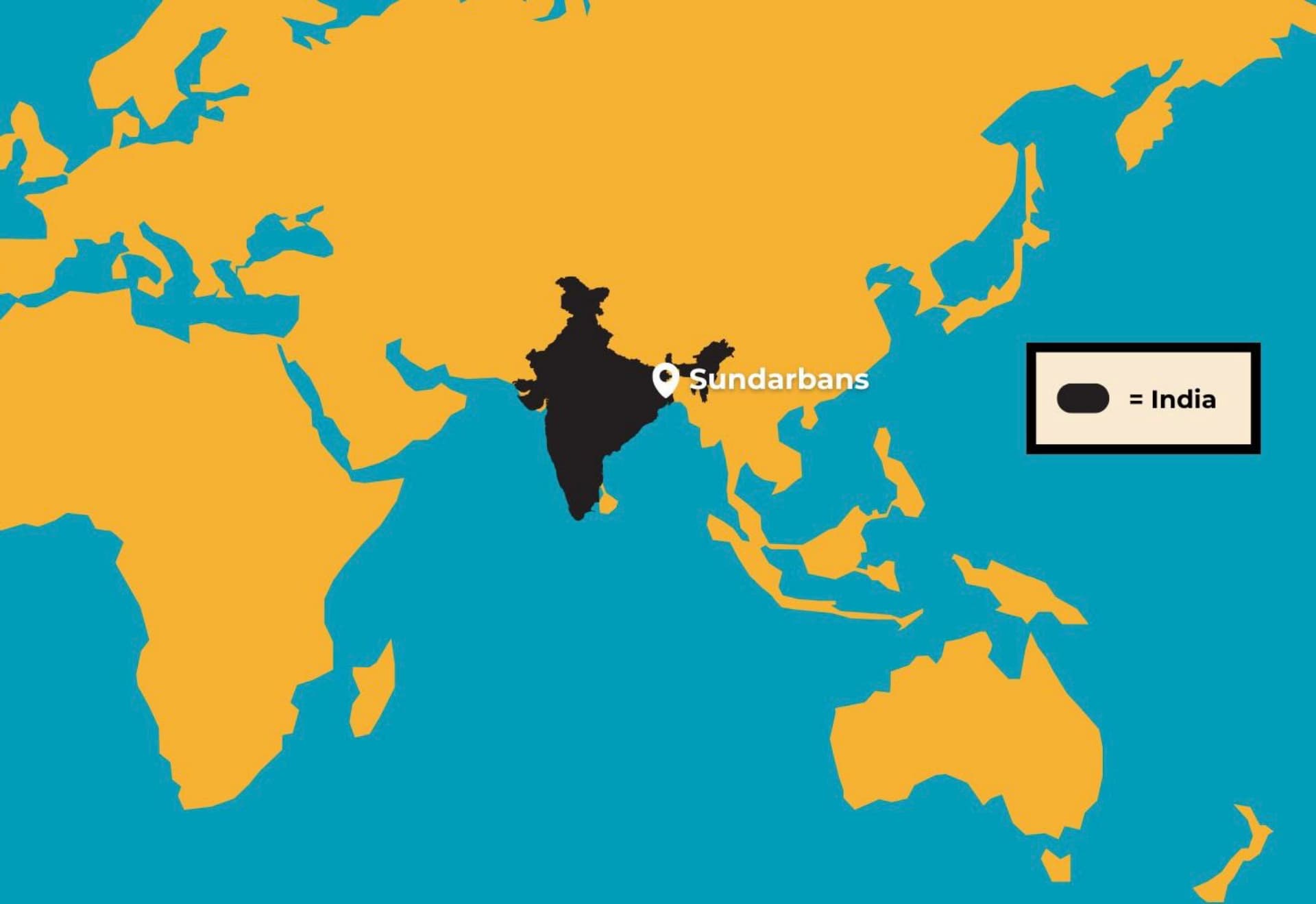
The Sundarbans is the world’s largest mangrove forest found in West Bengal, India. This incredibly biodiverse ecosystem covers 10,000 km² and hosts 4.5 million people and more than 1,000 species of plants, fish, mammals, birds, amphibians, and reptiles, including the critically endangered Bengal Tiger (Panthera tigris tigris).
 Because of increasingly strong storms and sea level rise, scientists predict that 40-80% of the Sundarbans will be underwater by the end of the century.
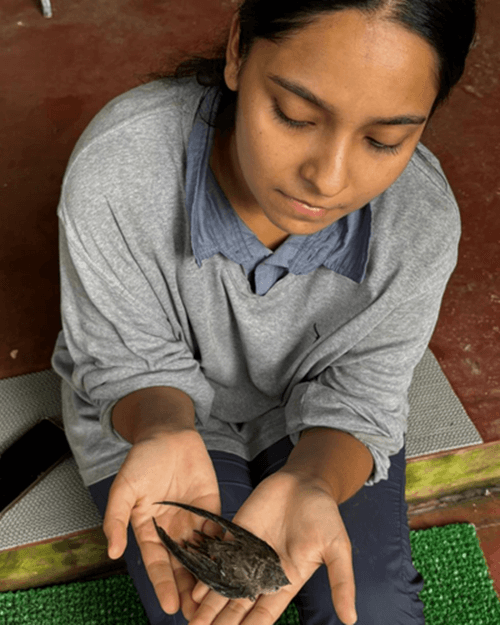
This is why our newest partner, Simran Sinha, is working with local women to protect this extremely important forest. Simran is a young conservationist from India passionate about community-centric conservation; over the next three months, she will be working with local women in the Sundarbans to gather knowledge, design, and implement innovative solutions to mangrove loss.
Her project combines sustainable livelihoods and conservation research and will be carried out in three stages:
- First, she and 7 local women partners, who will receive stipends for their work, will explore the mangrove forests to deepen their understanding of the problem and generate ideas. They will also document Traditional Ecological Knowledge that locals gain through practical, everyday interactions with the forest.
- They will use their observations and practical knowledge to design, build, and test prototypes of mechanisms to fight mangrove deforestation.
- Finally, they will share their experience with the community through social media and through a “Community Conservation Commons”, a shared library of Traditional Ecological Knowledge.
Women are so often taught that they don’t have the power to make real change. This project reframes that by making women the leaders of the solution, helping them turn knowledge and experience they already have into something that can transform the entire community — just like the mangroves they are working to save.
How You Can Get Involved
We are raising $3,500 to support rural women as they study and protect this vital coastal ecosystem. Your donations will directly support Simran and her local women partners, and the benefits from restoring damaged mangrove habitat will reverberate across the entire ecosystem.
Sundarbans host over 1,000 species of plants and animals, including the Royal Bengal Tiger.
4.5 million people depend on Sundarbans for their home and livelihoods.
By the end of the century, 40-80% of this ecosystem could be submerged in water.
The time to act is now — help us empower women to change the narrative and protect these precious trees. Click here to donate to this impactful project.