

In Port Loko, Sierra Leone, change is driven — by women on a motorbike
In 2025, Women for Conservation funded a motorbike for our partners at Fridays for Future Sierra Leone as part of our Women on Wheels initiative: providing bikes to women-led conservation projects to improve on-the-ground transportation. Through this initiative, we provided six bicycles in 2024 to women rangers in Madagascar, enhancing their protection of Baobab Alley, a national park in western Madagascar with gatherings of ancient baobab trees. With bikes, the rangers were 88% more effective at preventing fire incidents in the park; they also nearly doubled their kilometers patrolled compared to 2023. Now, with a motorbike, our partners in Sierra Leone are experiencing the same transformation.
Fridays for Future leads a community-driven revolution in climate resilience
Fridays for Future Sierra Leone, founded by Roseline Isata Mansaray, leads sustainable agriculture and reforestation projects with a focus on providing sustainable income and climate adaptation resources for local women. In 2023 and 2024, Fridays for Future and W4C trained over 100 women from Waterloo, Sierra Leone in wildlife monitoring and sustainable land management, planted more than 3,000 fruit trees, strengthening habitat for endangered pygmy hippos (EN) and chimpanzees (CR), and led community outreach programs at local schools, teaching students about environmental conservation.
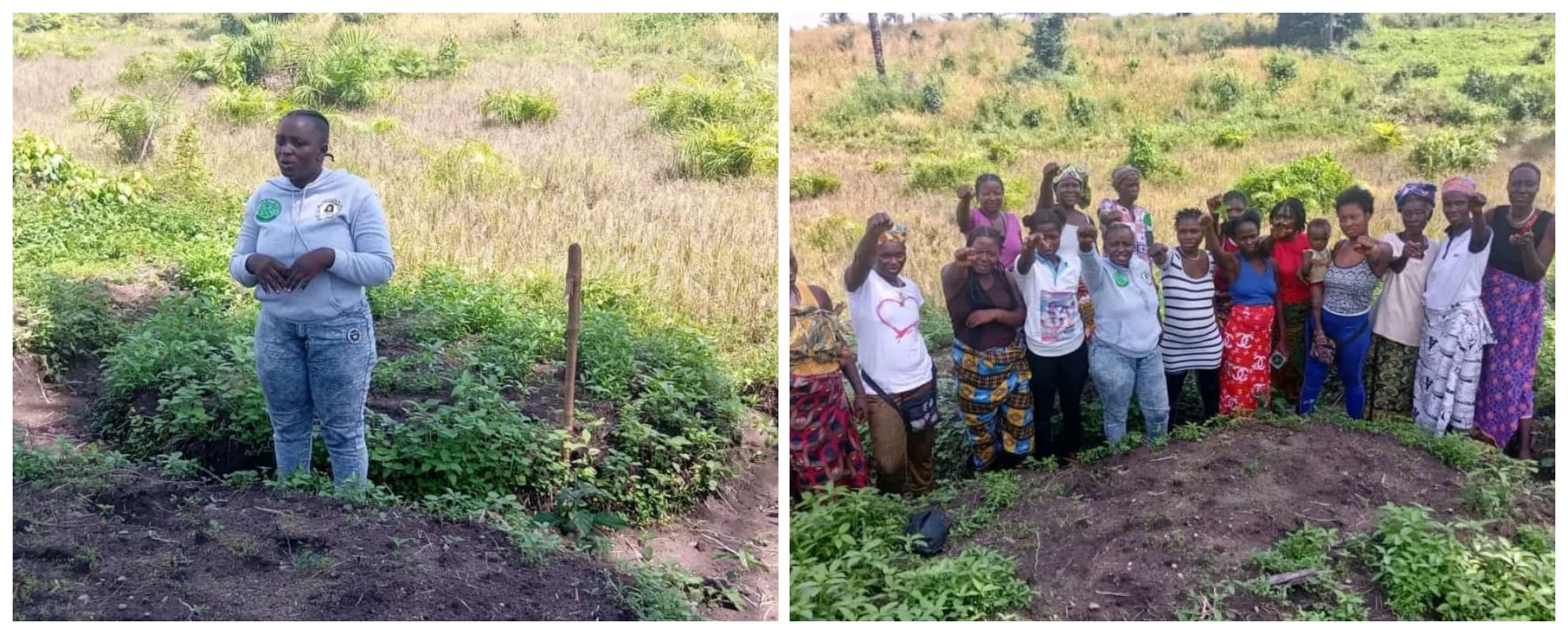
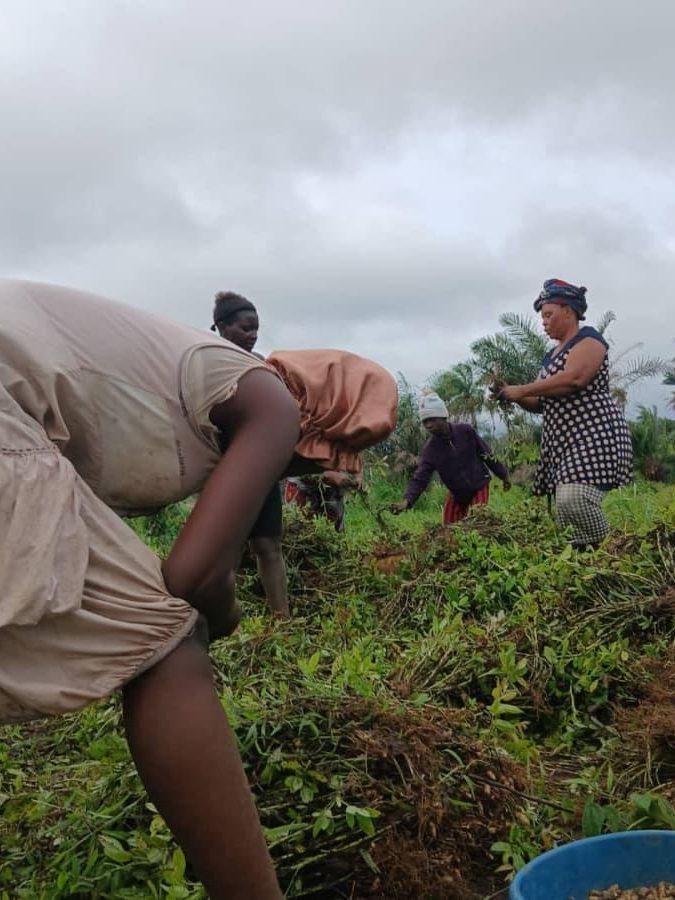
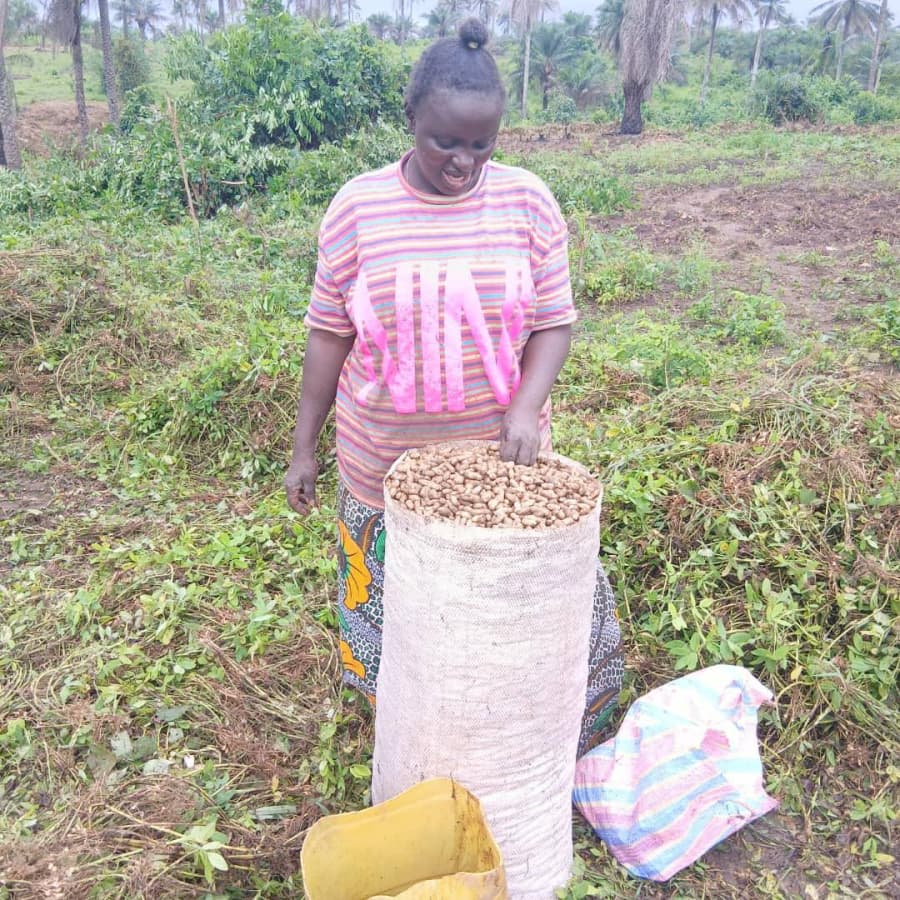
In 2025, Fridays for Future set their sights on a new project: sustainable agriculture and a climate-resilient community seed bank in the Port Loko district of Sierra Leone. Crops of groundnuts (you may know them as peanuts), cassava, and crain crain (a local vegetable), provide sustainable livelihoods and food security for 15 women. All three of these crops are resilient, nutrient-dense meal staples of Sierra Leone; groundnuts also enrich soil through nitrogen fixation, aiding future farm productivity and reducing reliance on chemical fertilizers.
Since the founding of Women for Conservation in 2019, we have worked to strengthen women’s leadership as a central pillar in protecting endangered species and strategic ecosystems. Since 2020, our organization has reached nearly 3,000 participants—primarily women and girls—through our family planning program.
The establishment of a seed bank also addresses food security, as well as agrobiodiversity loss and climate resilience. As the globe increasingly relies on industrial farming for food production, agrobiodiversity loss is a growing concern. Agrobiodiversity is the variety of plants and animals that humans use, directly or indirectly, for food and agriculture. Industrial agriculture encourages the transition to uniform, high yield crops across the globe. In fact, 75% of the world’s food comes from only 12 plants and 5 animal species! Agrobiodiversity loss is making food systems less resilient to climate change and disease. With less crop diversity, there is less insurance against disaster if one species or variety struggles. One key method for fighting agrobiodiversity loss is seed saving.
FFF is leading women in harvesting and storing climate-adapted and genetically diverse seeds for future use, ensuring future crops are more resilient to climate change and disease, and ensuring future access to nutrient-dense foods.
Fridays for Future on wheels
As this project requires frequent visits to remote farming communities, Fridays for Future needed better transportation. They previously relied on public transport, which is less efficient and more expensive.
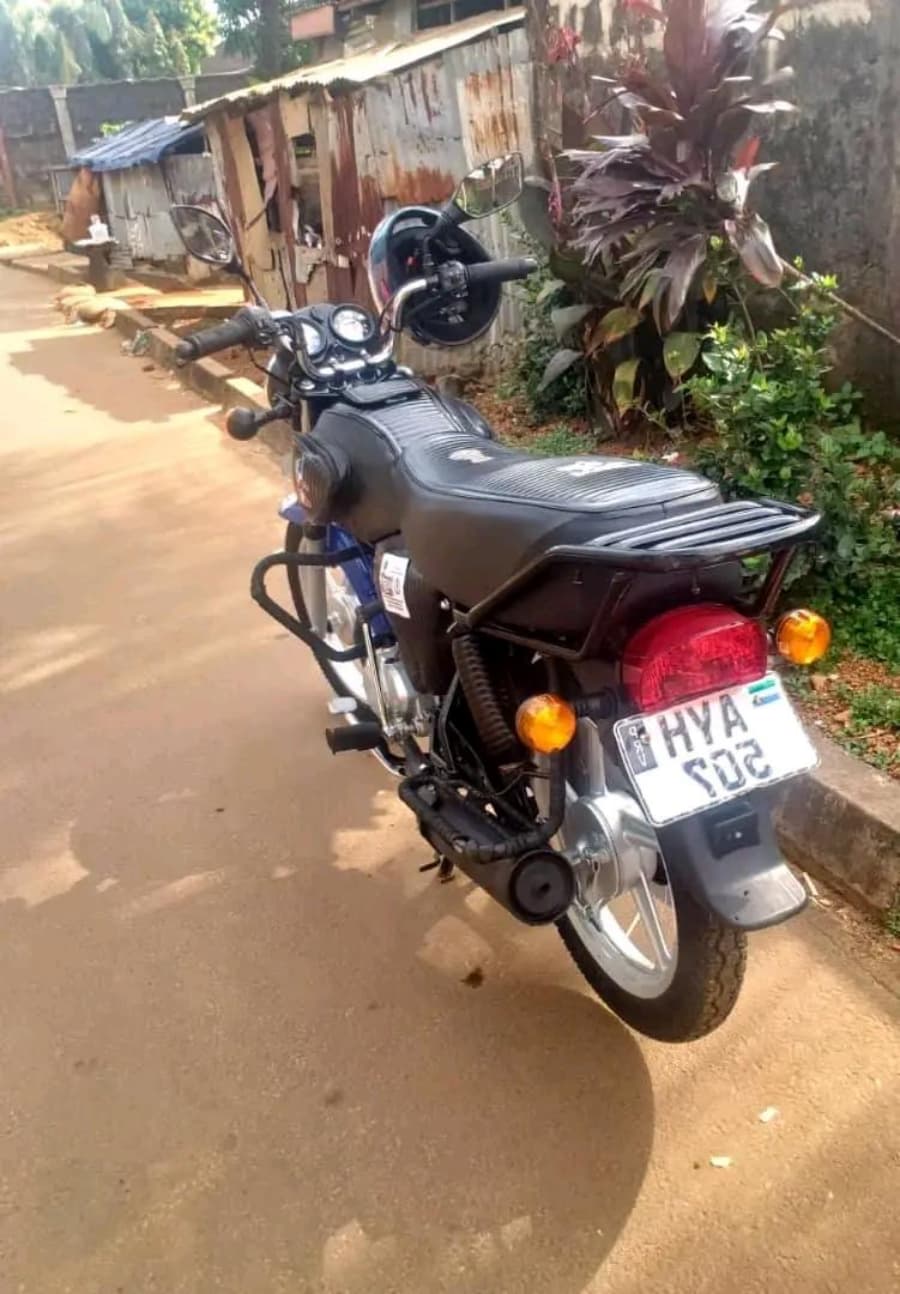
With help from a grant from Women for Conservation, Roseline and her team purchased a motorbike — a resource that has dramatically improved the team’s ability to oversee their projects. FFF can offer better, more timely guidance to the women farmers, meaning crops and yields are more successful. Travel on the bike is also much more cost-effective; money saved on transportation can go back into the budget, creating an even stronger impact.
In total, Roseline and her team employed 15 women who are now earning income from the sale of their produce and have learned skills to help them establish businesses of their own. More women are interested in participating in the program, demonstrating a community-wide shift in the understanding of sustainable livelihoods and the opportunities they can provide. “When women have the mobility and tools they need, they don’t just move themselves forward — they lift entire communities”, says Mansaray.
Helping Animals in Need
In Sierra Leone, habitat for some of the last remaining wild pygmy hippopotamuses (EN) and western chimpanzees (CR), this work is particularly important. As women adopt sustainable livelihoods, families can reduce reliance on jobs that are harmful to the environment. Many families in Sierra Leone make a living from logging or charcoal production, two industries which cause extreme deforestation and habitat loss which threatens endangered species. Fridays for Future is working to provide alternative options by creating eco-friendly jobs which also restore habitat for these two exceedingly vulnerable species.
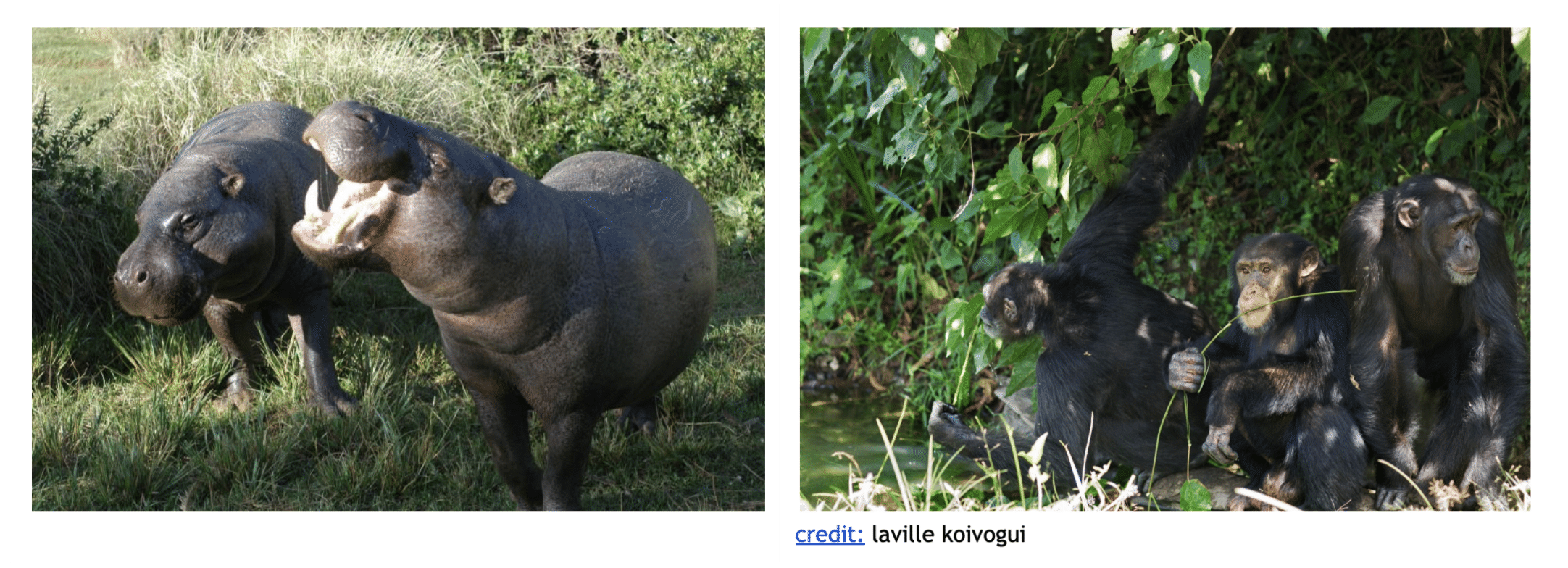
Recently, Roseline shared with us that western chimpanzees have been targeted in a heartbreaking series of brutal killings — for bush meat, and because humans and chimps have been pushed into closer proximity with one another as habitats continue to disappear. Western chimpanzees are already critically endangered, and are quickly disappearing. We need organizations like Fridays for Future are changing norms through environmental education and alternative livelihoods, spreading the importance of protection for endangered species, and making the world a better place for both humans and animals. “From planting thousands of trees to building climate-resilient farms, women in Sierra Leone are leading change from the ground up,” says Mansaray.
Fridays for Future’s story illustrates how a simple resource — a motorbike — can make an enormous difference in the lives and work of rural women. Women on Wheels allows our partners to build deeper ties to their communities and be more present in their work — delivering more efficient and impactful results.
This project would not be possible without our generous community of donors and supporters. We are beyond grateful that you have chosen to be part of this story and the stories of the thousands of other women we work with and for, in Colombia and across the globe. Thank you.
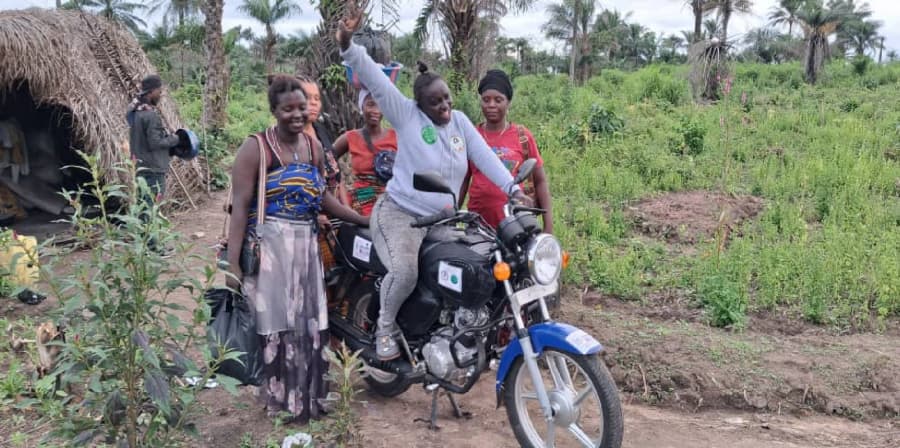
Mansaray celebrates the new motorbike